STROKE CENTER DESIGNATIONS

Not all strokes are the same

Stroke Center designations, such as those outlined by credentialing bodies, describe the capabilities that a hospital should have to treat stroke patients of various complexities. Similar to the trauma model, stroke center designations (Level 1, 2, and 3) can help EMS personnel align a patient’s needs with the appropriate level of care.

“ELVO patients should be taken to Level 1 stroke centers. Establishing guidelines for Level 2 stroke centers gives patients a chance at the best possible outcome in underserved regions. These guidelines, issued by this eminent group of organizations, will help facilities around the world maintain the highest standard of care for stroke patients.”

Designations at a Glance

ComprehensiveThrombectomy-CapablePrimary
CapabilityFull spectrum careThrombectomy-capableSome capacity
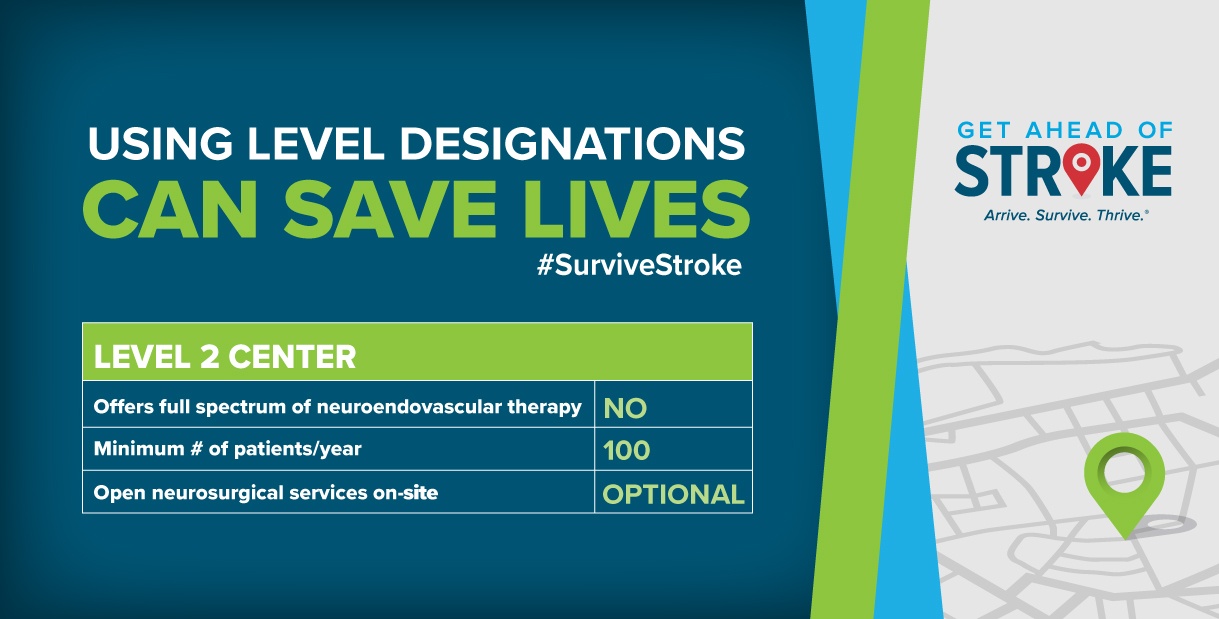
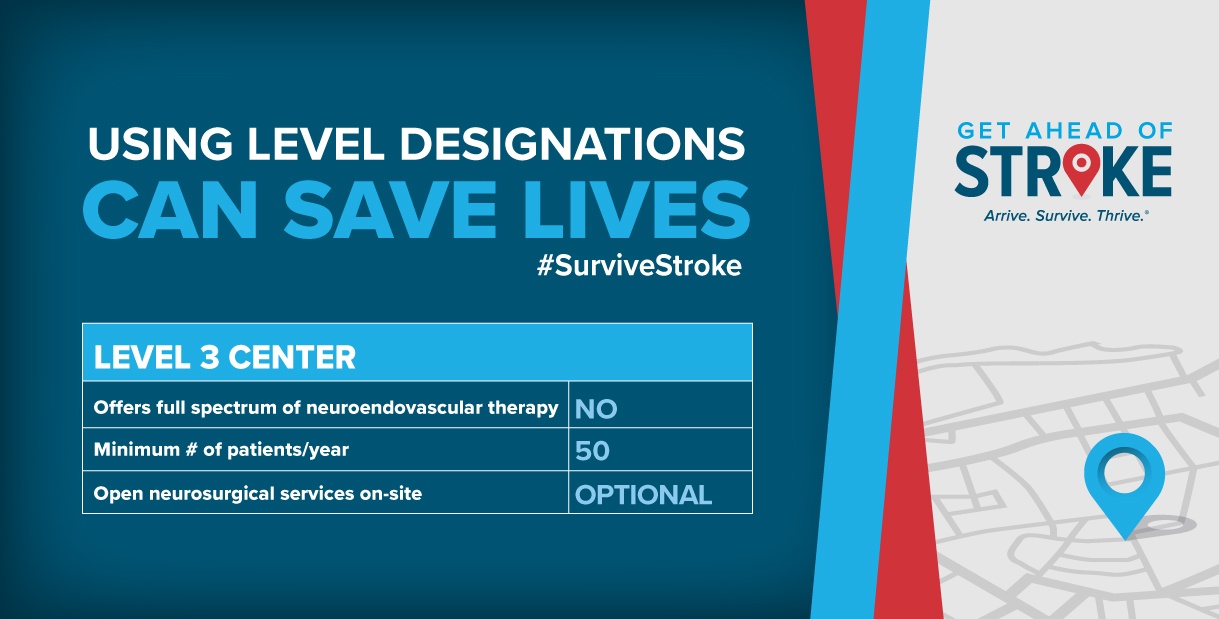
# of patients/year25010050
# of procedures/year5050N/A
Dedicated neuro-ICU unitYesSometimesNo
Dedicated stroke unitYesYesYes
Neurosurgical services onsiteYesSometimes but may transferSometimes but may transfer

Comprehensive Stroke Centers (Level 1) 

Ideally, all severe stroke patients would be treated at a Comprehensive Stroke Center (Level 1), which offers a full spectrum of neuroendovascular care 24/7/365.

Thrombectomy Capable Stroke Centers (Level 2) 

Thrombectomy Capable Stroke Centers (Level 2) may be appropriate for patients without timely access to a Comprehensive Stroke Center (Level 1).

Primary Stroke Centers (Level 3)

Primary Stroke Centers (Level 3) may be appropriate for patients without timely access to a Comprehensive Stroke Center (Level 1) or Thrombectomy-Capable Stroke Center (Level 2). In most cases, however, patients who are candidates for thrombectomy would have to be transferred from the Primary Stroke Center to a center that can perform the procedure.

Download and post these graphics to your own social media platforms to help us spread the word.