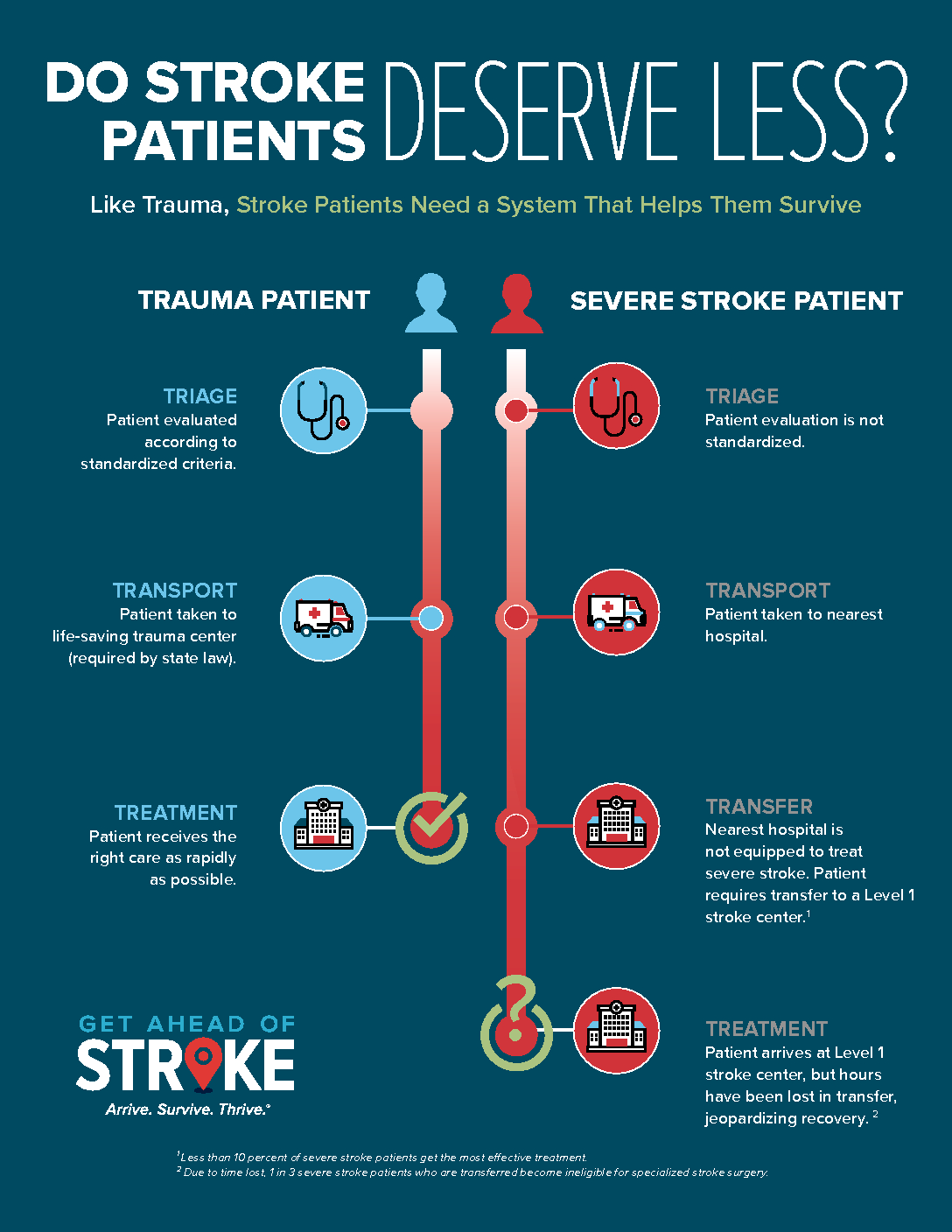
Like Trauma, Stroke Systems Matter
This infographic illustrates the difference between systems of care for trauma patients and severe stroke patients, providing a visual reminder of the critical moments for care that can be lost due to inefficient protocols.
Meet Phyllis. She suffered a stroke, but was able to make a full recovery after neuroendovascular surgery.

Meet Valerie. She suffered a stroke, leaving her unable to speak and paralyzed on her right side. After neuroendovascular surgery, Valerie can speak, walk, and is “doing good!”

Your organization can use this article template to educate your members, partners, and the public about the Get Ahead of Stroke® campaign and why it matters. Use this Word document as is, or adapt it to include information about what your organization does to help patients #SurviveStroke.

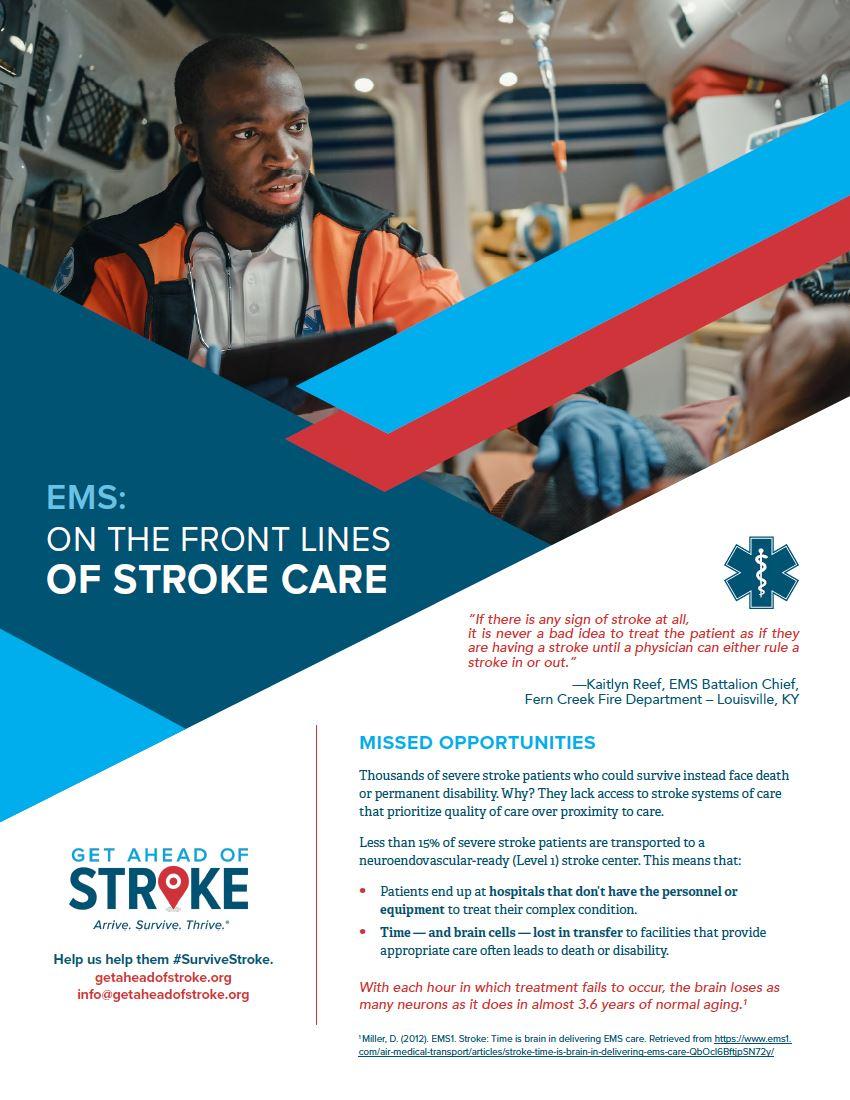
EMS: On the Front Lines of Stroke Care This fact sheet shares statistics related to strokes and stroke care to show first responders why the Get Ahead of Stroke® campaign aims to improve systems of care for severe stroke patients. By providing background about thrombectomy and its effectiveness, as well as answers to possible questions, the fact sheet gives first responders an overview of current challenges and the campaign’s goals.

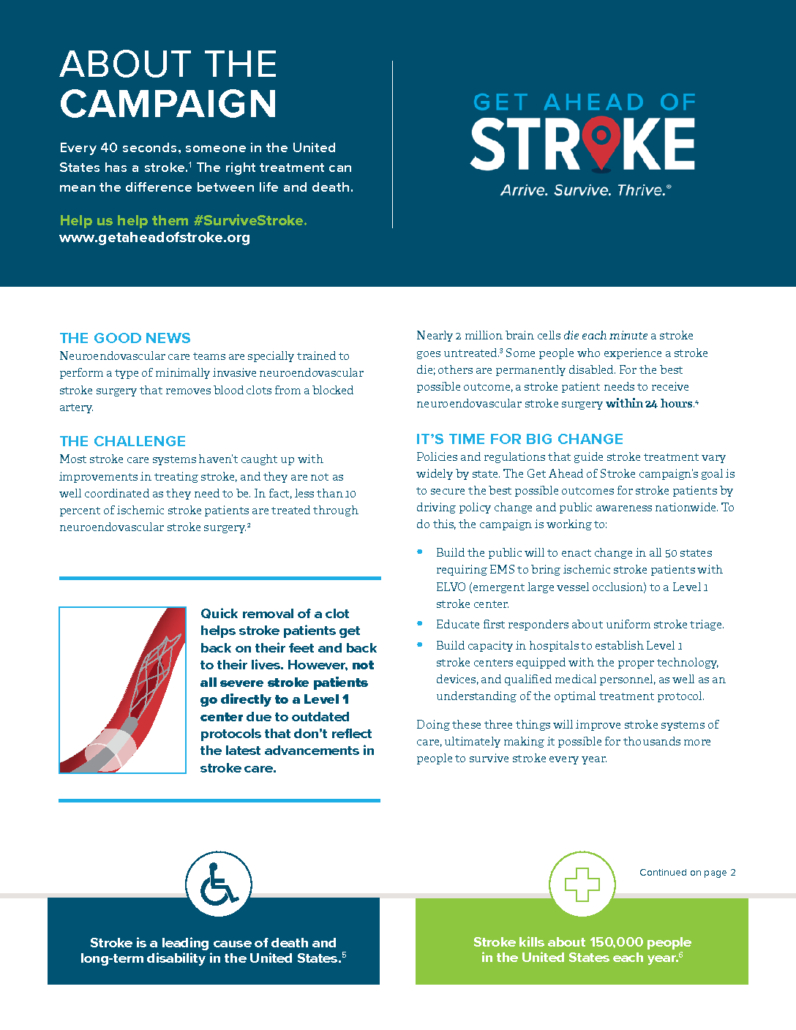
Learn about the Get Ahead of Stroke® campaign goals and why the campaign is essential to helping more patients #SurviveStroke. This fact sheet includes important information about severe strokes and thrombectomy, the most effective care to help patients make a full recovery.